

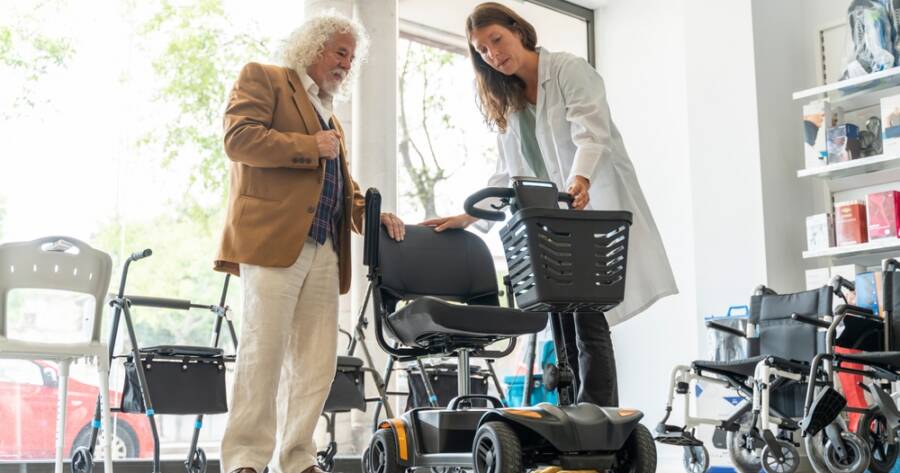
Medicare coverage for mobility scooters offers essential support for individuals with mobility challenges, ensuring access to vital devices. By understanding the eligibility criteria, types of scooters covered, and the process for obtaining one, individuals can navigate Medicare’s complexities. Also, understanding cost implications and alternative funding options further enhances accessibility, empowering users to maintain their independence.
Understanding Medicare Coverage for Mobility Scooters
Mobility scooters are essential for individuals who face challenges with mobility, providing them with the freedom to move independently. Medicare plays a significant role in making these devices accessible by covering a portion of the costs under its Durable Medical Equipment (DME) benefits.
Medicare Part B is primarily responsible for this coverage, which includes both the purchase and rental of mobility scooters. To qualify, the scooter must be deemed medically necessary, requiring a doctor’s prescription and a face-to-face examination with a healthcare provider (source).
Eligibility and Medical Necessity Criteria
To be eligible for Medicare coverage of a mobility scooter, specific criteria must be met. The patient must have a health condition that significantly impairs mobility within the home, making it difficult to perform daily activities.
The home environment must also be suitable for scooter use. A doctor’s evaluation is crucial, as they must confirm that the scooter is necessary for mobility within the home. This evaluation must be documented and submitted to a Medicare-approved supplier within 45 days to remain valid (source).
Types of Medicare-Approved Mobility Scooters
Medicare covers various types of mobility scooters, each catering to different needs and environments. These include three-wheel scooters for maneuverability in tight indoor spaces, four-wheel scooters for outdoor stability, heavy-duty scooters for larger body types, and foldable scooters for portability. Each type is designed to address specific mobility challenges, ensuring that users can navigate their home environment safely and efficiently (source).
Cost and Out-of-Pocket Expenses
While Medicare covers a significant portion of the cost of mobility scooters, patients are still responsible for certain out-of-pocket expenses. After meeting the annual deductible, Medicare Part B typically covers 80% of the approved amount, leaving the patient to pay the remaining 20% coinsurance (source).
For instance, if a scooter costs $2,000 and Medicare approves $1,500, Medicare would cover $1,200, and the patient would be responsible for $300. Supplemental coverage options, such as Medigap, can help cover these additional costs.
Process for Obtaining a Scooter Through Medicare
The process of obtaining a mobility scooter through Medicare involves several steps. It begins with a medical evaluation and the submission of necessary documentation by the physician.
The patient must then purchase the scooter from a Medicare-approved supplier to ensure compliance with Medicare guidelines. It is important to use in-network providers and follow up on applications to expedite the approval process, which typically takes 2–6 weeks, depending on paperwork accuracy (source).
Challenges and Alternatives
Despite the support Medicare provides, there are challenges in obtaining coverage for mobility scooters. Common issues include denials due to incomplete forms and limited supplier networks.
If Medicare does not cover a scooter, alternatives include Medicaid programs, veteran benefits, and private insurance or financing options. Patients should explore these options to find the best solution for their mobility needs (source).
Why You Should Learn More About Medicare Coverage for Mobility Scooters Today
Understanding Medicare coverage for mobility scooters is crucial for those who rely on these devices for daily mobility. With the right information, patients can navigate the complexities of Medicare, ensuring they receive the necessary support to maintain their independence.
By learning more about the eligibility criteria, types of scooters covered, and the process for obtaining a scooter, individuals can make informed decisions about their mobility needs. Additionally, exploring alternative funding options can provide further financial assistance, making mobility scooters more accessible to those who need them.